

In indoor vertical farming, light isn’t an accessory — it is a growth variable. When it’s stable, uniform, and tuned to species and stage, vertical cultivation becomes more predictable, faster to manage, and more consistent in its results. That’s where lighting design makes the difference between a decent harvest and a truly scalable process powered by vertical farming technology.
Why light is essential in vertical farming
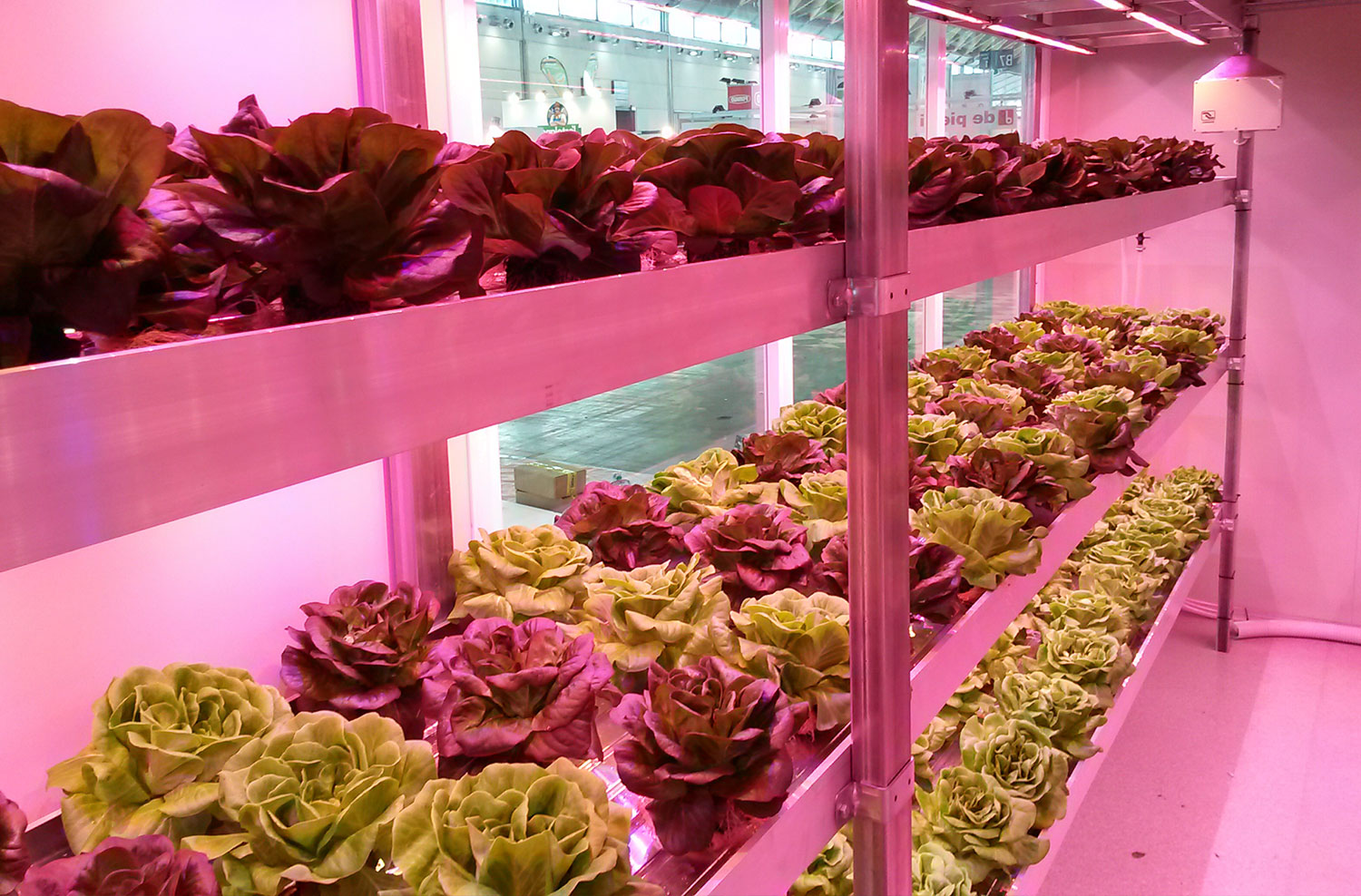
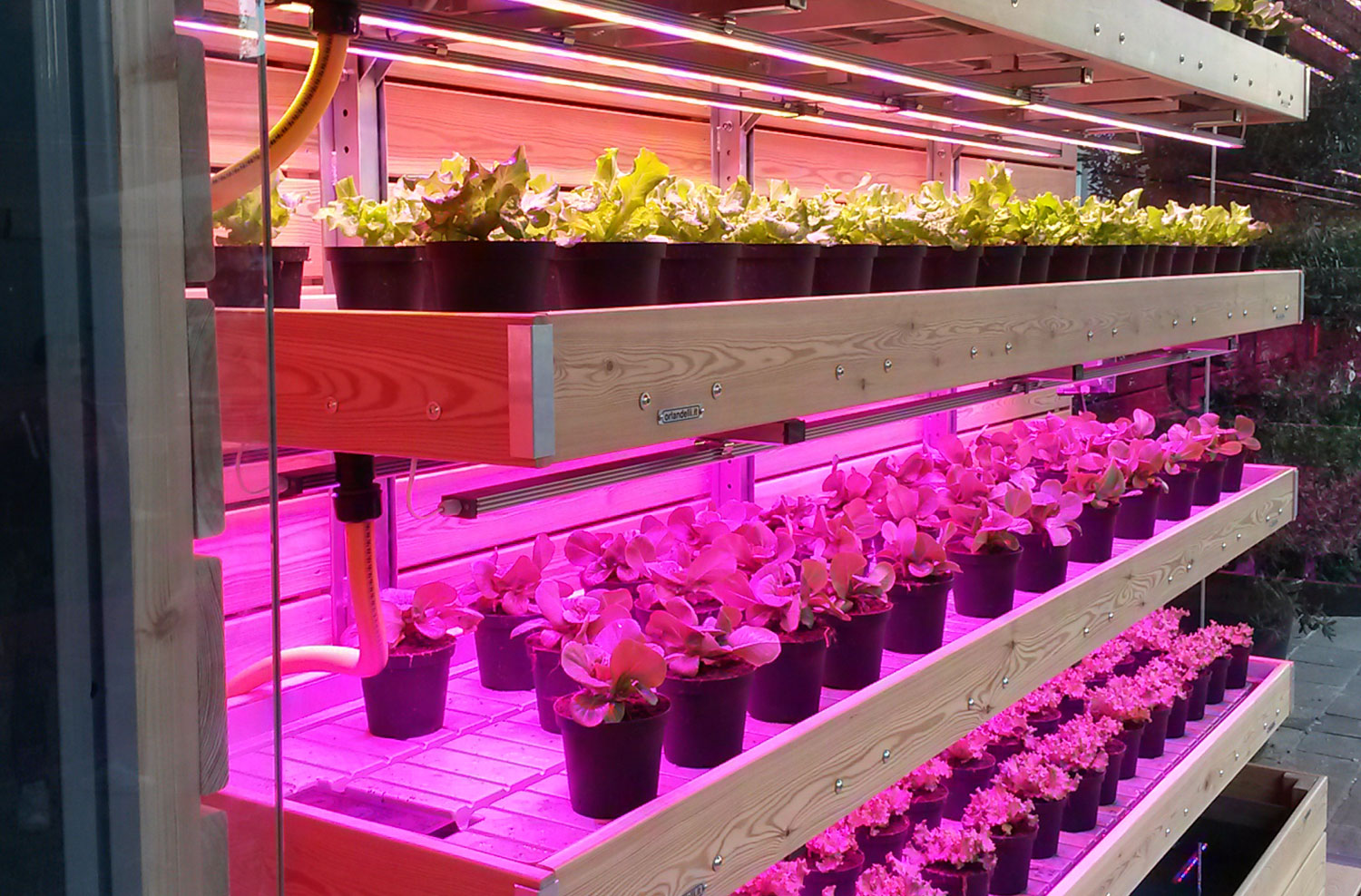
Space is tight, there are many tiers, and cycles move fast. Light must reach both tray edges and centers evenly, keep a spectrum aligned with the plant’s stage, and follow schedules and intensities without fluctuation. It’s a practical approach to indoor vertical farming: less waste, more control, and sustainable production that holds up over time — especially in plants research environments and facilities dedicated to the study of plants.
What changes with Ambralight LEDs
We design light like a true “nutrient,” managed by dose and quality. The spectrum is customized to steer morphology, color, and aroma; uniformity across tiers prevents privileged plants in the center and neglected ones at the edges; and control (photoperiod plus dimmable intensity) reduces stress and makes cycles repeatable. In practice, you get visible quality, consistent lots with fewer reworks, and tightly managed consumption — exactly what indoor vertical farming technology is built to deliver.
Case study — Bio Extra Solum (basil, 12 months a year)
With Bio Extra Solum, the farm run by Vittorio Gariglio in Piedmont (Northern Italy), we built a vertical hydroponic setup: 6 racks with 4 levels each, in a closed environment with no natural light. Our LED grow lights — calibrated spectrum, precise control of photoperiod and intensity — standardized basil growth year-round. The project also served as a controlled sandbox for plants research and the study of plants traits under consistent lighting.
Key results:
This controlled-environment project shows how well-designed lighting enables high, repeatable quality in indoor vertical farming.
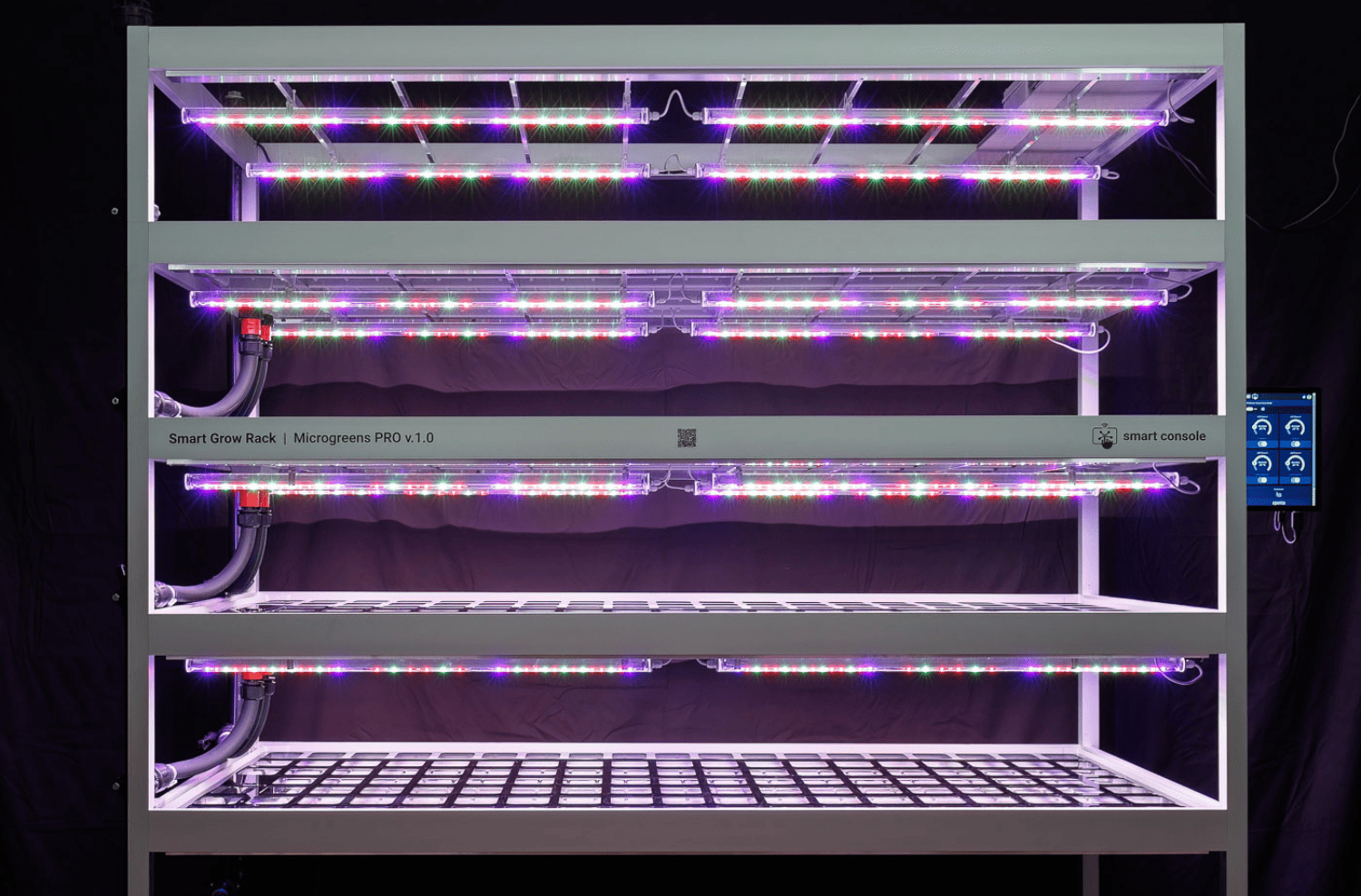
Setting up lighting for vertical cultivation (3 essential moves)
Mistakes to avoid
A “one-size-fits-all” spectrum, random spacing between tiers, neglected uniformity, and no automation lead to higher consumption and uneven quality. It takes very little to put light back in service of production — and to get the best from your indoor vertical farming technology.
Why Ambralight
Because we start from your crop goals. We design lighting for species and stage, fine-tuning distances and uniformity on every tier. We set a few clear scenarios (timings and intensities) so day-to-day use is straightforward. At launch we measure, then we come back to verify and adjust if needed. The result: stable quality, less waste, higher yield.
That’s how we make indoor vertical farming simple to manage and reliable over time — whether your priority is production or plants research.