

Basil is the king of aromatic herbs: it perfumes the kitchen, grow quickly, and provides great satisfaction. Without the right light, though, it turns leggy, stretches between nodes, and loses aromatic intensity. Here’s a clear, practical guide to growing basil with LED lighting for plants — recommended settings, pitfalls to avoid, and simple setups for home, office, or greenhouse.
Basil and light: how much does it really need?

Basil is a sun-loving plant. It thrives in bright, stable conditions. Indoors, a well-designed LED grow light helps you keep growth compact, leaves thick, and aroma intense all year round.

  • Photoperiod: 14–16 hours of light per day is a great starting point.

  • Intensity:a medium level works best — think of a light that “fills” the canopy without heating it.
  • Spectrum: balanced, with blue to build sturdy vegetative growth and red to drive leaf production.

With LEDs you reduce energy waste, keep temperature under control, and deliver light only where it’s needed.

Why LED is the smart choice

  • Consistency: LEDs maintain stable output over time — essential for uniform basil cultivation.
  • Efficiency: more useful light per watt, less unwanted heat near the leaves.
  • Control: precise settings for both intensity and timing.
  • Integration: compact, quiet modules — ideal for a home kitchen shelf or an office ledge.

How to care for basil with LED light (easy setup)

Below is a simple, repeatable “recipe” for an optimized basil grow. The same principles scale from single pots and small trays to large greenhouse production.

  • Lamp placement: keep a safe distance from the canopy to avoid hot spots. If you see tips yellowing or curling, raise the fixture a few centimeters or lower the intensity.
  • Light schedule: set a timer to 14–16 hours of continuous light; avoid frequent on/off cycles during the day.
  • Watering: basil dislikes standing water. Water when the top few centimeters of substrate are dry; small, regular waterings are better.
  • Nutrition: light, regular, balanced feeding — especially if you harvest often.
  • Air & temperature:: gentle air exchange and a stable temperature (ideally not below 18–20 °C).
  • Harvesting: pinch above a node (don’t pluck single lower leaves). This encourages branching and continuous production.

Pro tip: rotate pots every 2–3 days for symmetrical growth if light comes more from one side.

Common mistakes (and how to avoid them)

  • Insufficient light → long stems, small leaves: increase duration or cautiously move the lamp closer.
  • Excess heat → scorched tips: move the source away or reduce intensity.
  • Waterlogging → suffocated roots: improve drainage and water more lightly.
  • Wrong cuts → weakened plants: always harvest above a node; don’t “strip” the base.
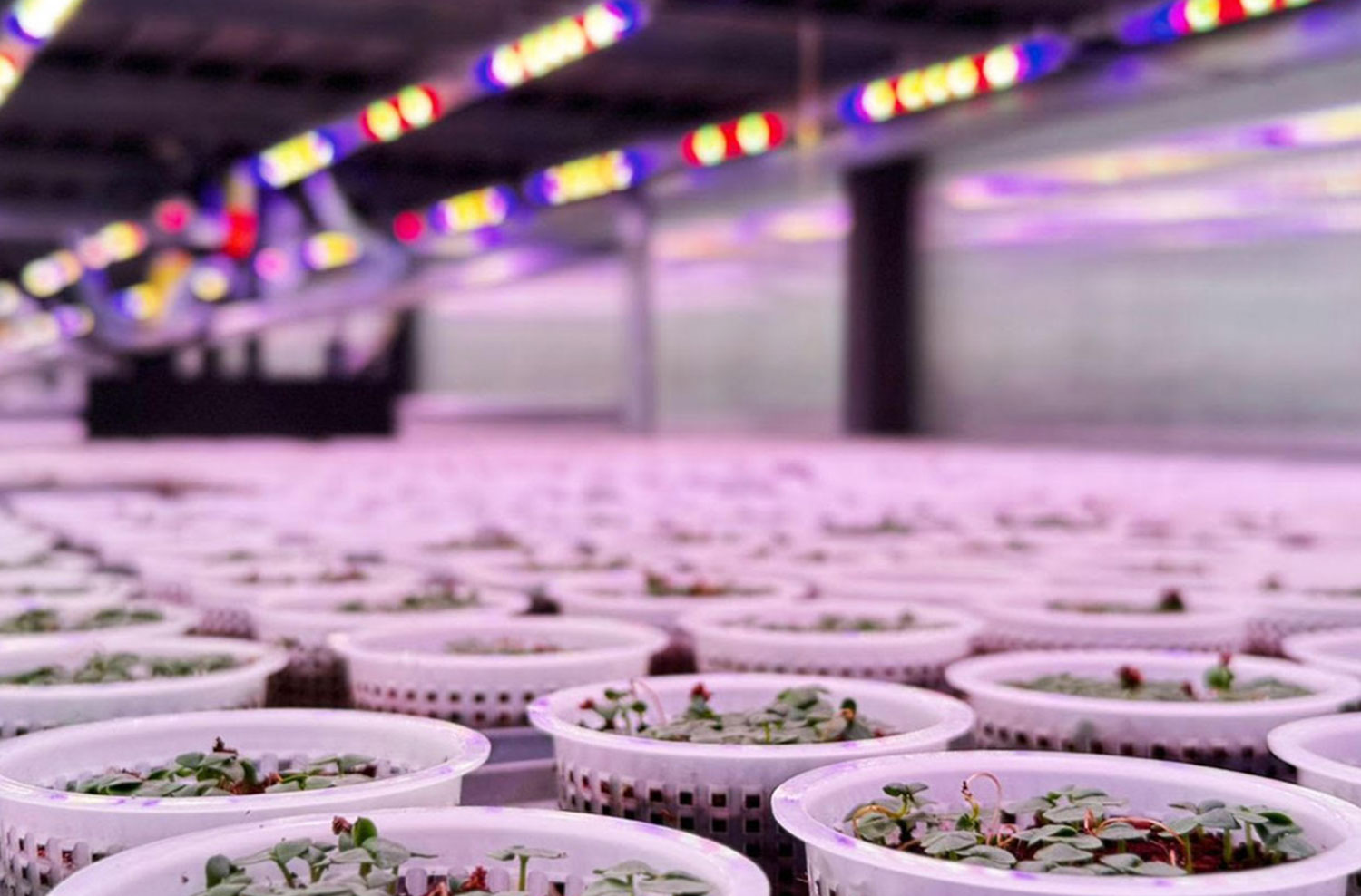
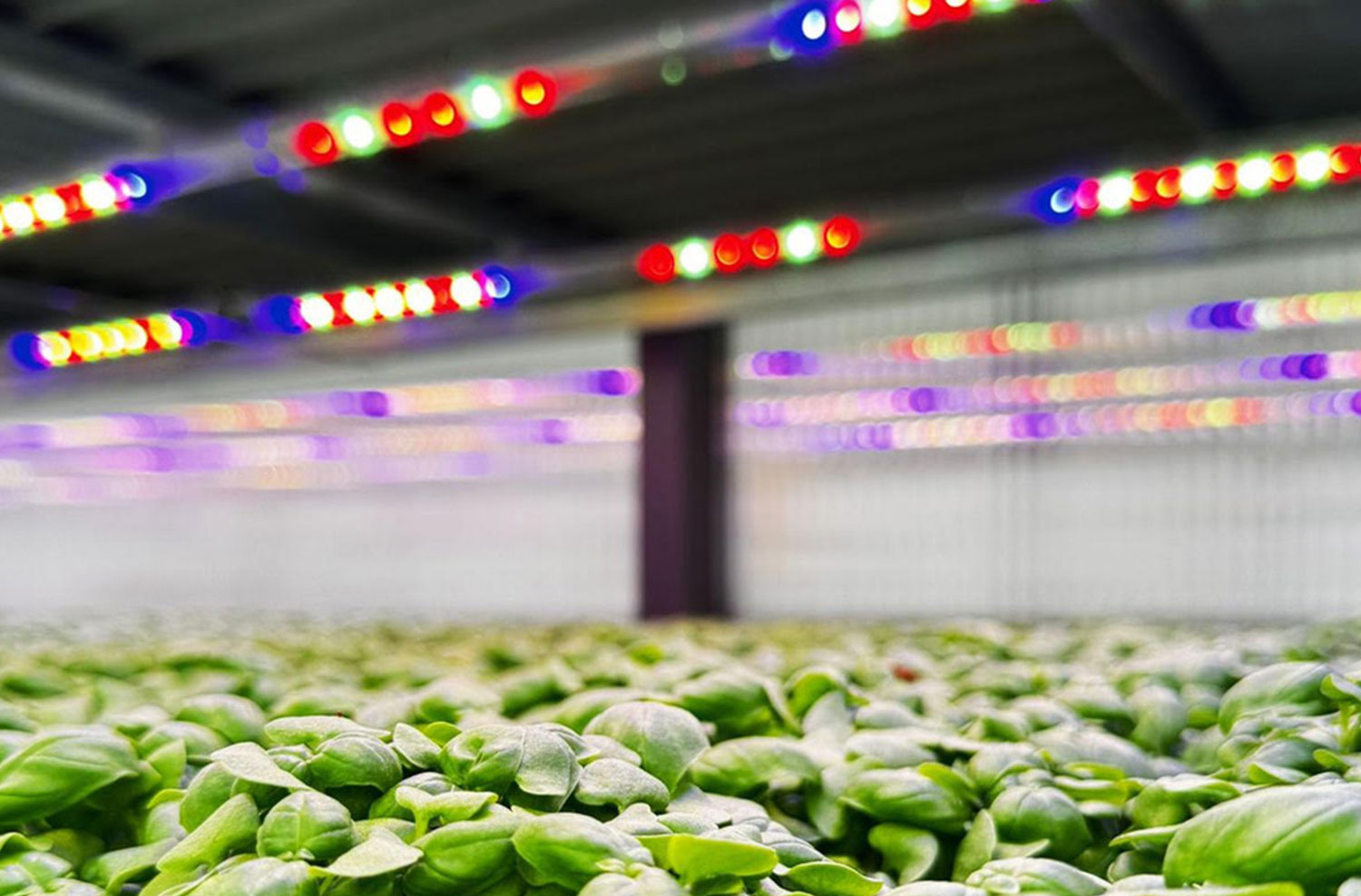
Bio Extra Solum’s indoor vertical farming systems with hydroponic setup and Ambralight LED lighting for growing plants.

Why choose Ambralight

We design LED lights for plants to deliver the right light, in the right place — simply. Calibrated spectra for herbs like basil, intuitive control, and layouts that blend discreetly and efficiently into any space. With Ambralight, you can count on wasting and spending less while producing more.